It has been over a month since I ran 338 kilometres at Vineyard Ultra, and as I finally sit down to pen my thoughts, the memories feel as vivid and immediate as the pain that took weeks to heal.
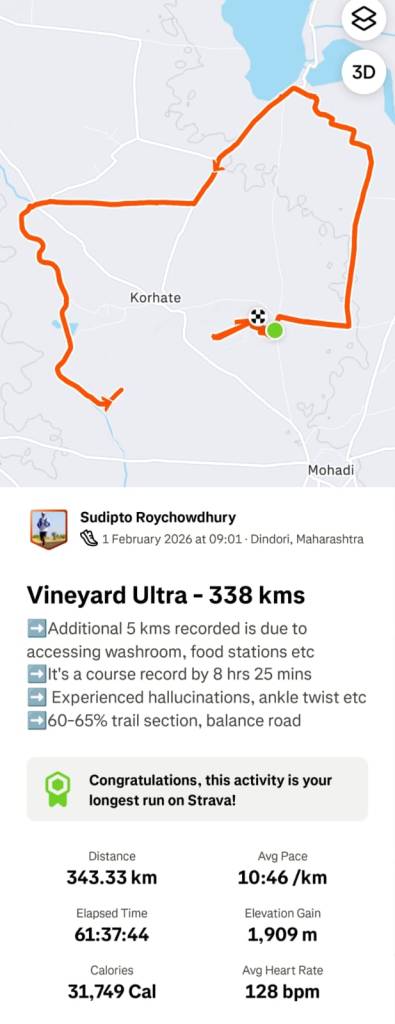
Vineyard Ultra is a race organised by Blue Brigade Foundation at Shahyadri Farms in Nashik, held across multiple distances with 2026 marking its fourth edition. The 338 km route weaves through a daytime loop of 25 km and a shorter night loop of 10 km, combining non-technical trail and asphalt roads through the rolling landscape of the Nashik farmlands. Two aid stations punctuate the course at the 5 km and 12.5 km marks, the U-turn points offering the only reliable refuge of food, water, and human company across three relentless days and nights.
Why This Race
Vineyard Ultra had lingered at the back of my mind for years, ever since I wanted to do a 300 km plus race and entered a category of races that few people in the world even attempt. Yet I never registered. Part of it was hesitation about whether I was truly ready; a bigger part was the emotional baggage I had been carrying from 2025, a year where I tied my self-worth too tightly to race outcomes and paid a heavy psychological price. Multiple races, multiple disappointments, all of them self-inflicted through result-oriented success metrics I had no business creating for myself in the first place.
So this time, I did something different. I decided to register at the last possible moment, arrive without time goals, and simply try to finish comfortably within the cutoff. No pressure. No expectations. No story I needed the race to tell about me. Just running.
Preparation
My training leading into this race was honest, if not extraordinary. Monthly mileage for November, December, and January came in at 320 km, 385 km, and 265 km respectively built around a 201 km Backyard Ultra in December and the Malnad Ultra 100 km in November, both of which served as long training efforts as much as races in their own right. In the weeks immediately before Vineyard Ultra, I was averaging 80–85 km per week alongside two strength sessions. Nothing dramatic. Nothing radical. Just consistent, quiet work that I trusted would be enough as I was time restricted due to professional commitments.
Race Week
I registered exactly one week before the event, booked my travel from Bengaluru to Nashik, and planned to arrive at the venue the evening before giving myself roughly 18 hours of rest before the gun. The ultra distances were scheduled to begin at 9 AM, which meant a few precious extra hours of sleep compared to the pre-dawn starts that many ultras demand. It was a small mercy, and I accepted it gratefully.
The Evening Before
I arrived at Shahyadri Farm, Nashik on the evening of January 31st, the farm itself doubling as the start and finish point for the entire race. The organisers had arranged accommodation on-site, and I found myself sharing a room with four other 338 km runners, all legends in their own right, each carrying the quiet, unhurried confidence that only comes from having done very hard things before.
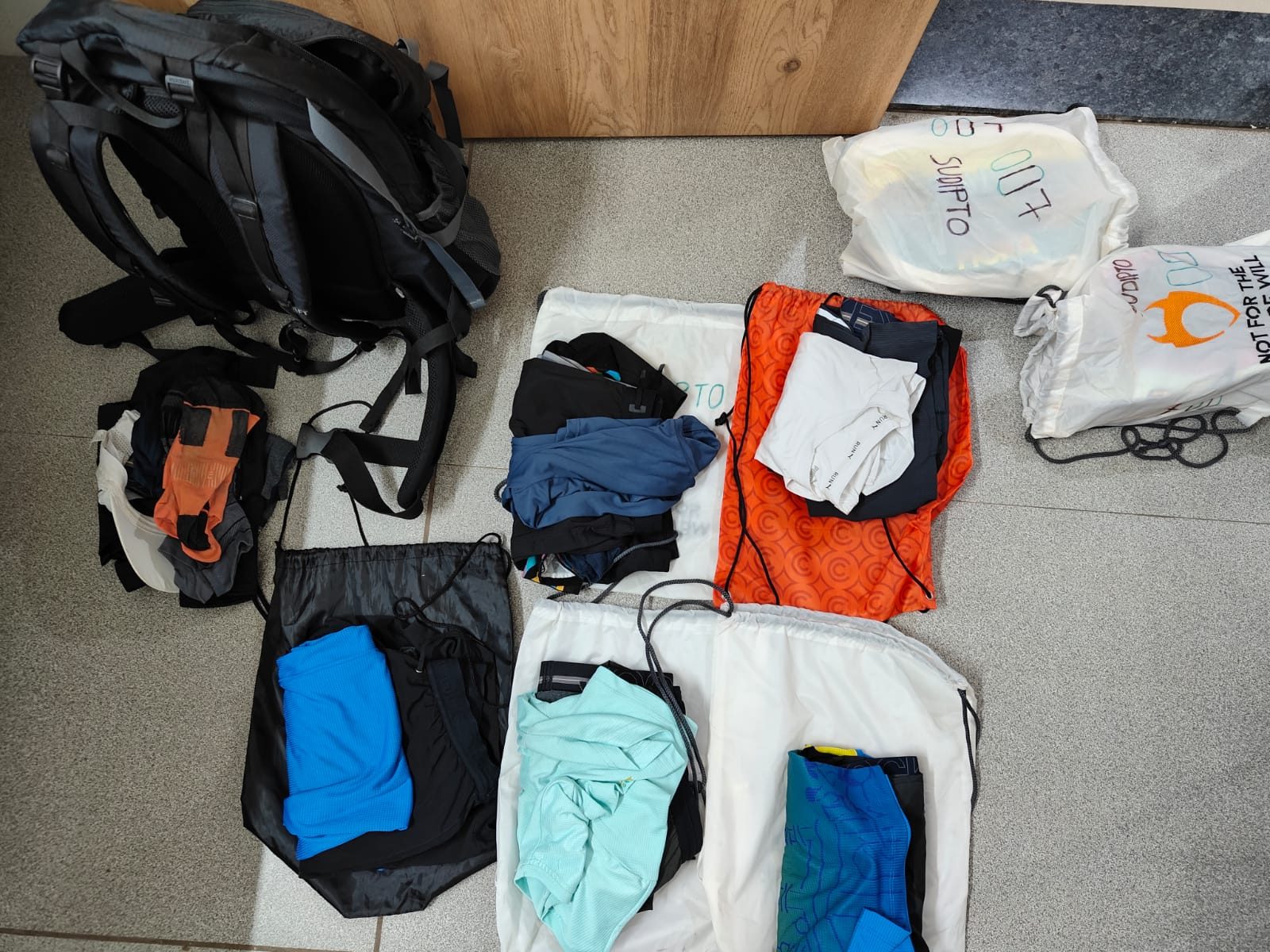
The route briefing was held in the evening, followed by dinner and easy conversation with fellow runners. Afterwards, back in the room, I laid out all my gear in a deliberate sequence each item in a specific order so that mid-race clothing changes would cost me as little time and mental energy as possible. With everything arranged, I finally turned in for the night, letting the anticipation settle into something closer to calm.
Race Day — Day 1
I woke up, had breakfast, completed my morning routine, and stood at the start line with that particular cocktail of calm and electricity that only runners truly understand, the body ready, the mind quieter than expected, the race still entirely theoretical.
My race plan was simple: go slow, listen to the body, and let the race come to me rather than chasing it. The targets I had set, 160 km in 24 hours, 220 km in 35 hours and balance as the body holds, were loose reference points to keep me honest, not deadlines to be anxious about. My deeper intention was to push through without sleep for as long as the body would allow, curious about where that particular threshold lay.
The race began at 9 AM, cheered off by runners from shorter distances who had already completed their own battles and were now lining the start to send us on our way. Almost immediately, both my lower calves seized up with a tightness that slowed me to a shuffle whether it was pent-up tension, inadequate warm-up, or simply my body’s habitual resistance to the idea of running very far, I couldn’t say for certain. I slowed down significantly, taking multiple stretching breaks along the way while fellow runners paused to check in with genuine concern. Then, around the 10–15 km mark, like a slowly releasing knot, the tightness dissolved and the race truly, properly began.
The goal was a modest 7–8 km per hour, and I settled into that rhythm with patience. The company of runners from shorter categories kept the early hours lively and social in a way I knew Day 2 and Day 3 simply would not be, so I enjoyed the noise while it lasted. At 3:30 PM, with 50 km complete in 6 hours 30 minutes, I sat down for lunch genuinely satisfied with how the opening act had unfolded, the body warm and cooperative, the mind at ease.
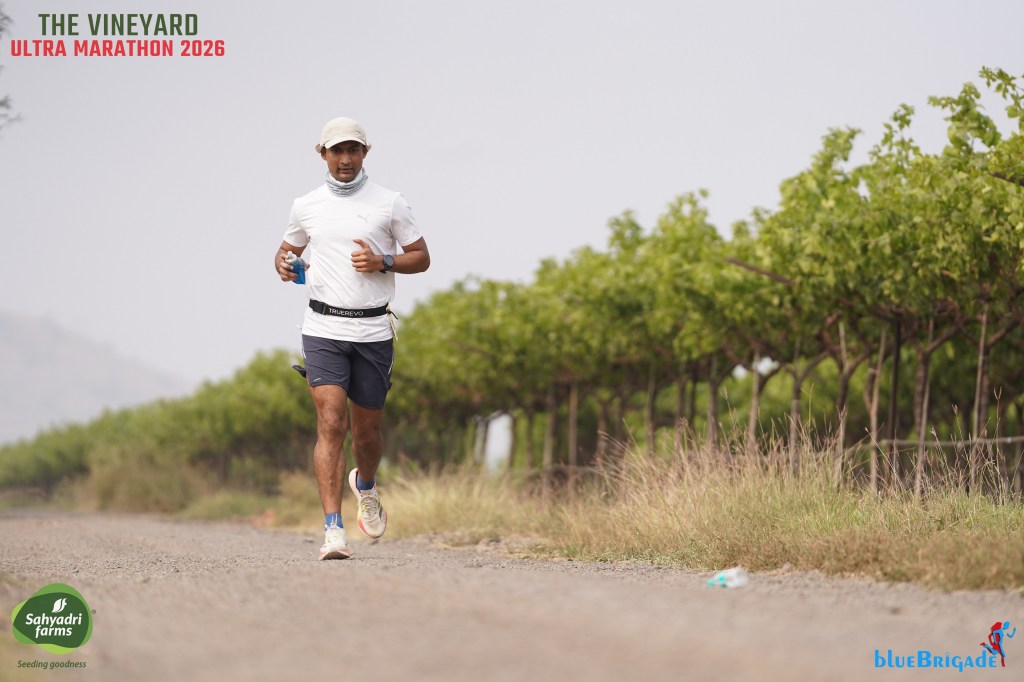
The course had two trail sections worth understanding. The first was a one-kilometre stretch within the opening 5 km of each loop, manageable but requiring attention. The second was a more demanding 3 km section running parallel to a canal consisting of uneven ground, with stones jutting out at unpredictable angles that had already claimed the ankles of several runners before the day was out. Crucially, this canal section was closed after 6 PM each evening, which shaped my entire daily strategy: cross the canal before dark, walk the shorter trail patch at night with care, and protect myself from the kind of injury that could unravel three days of effort in a single careless step.
I managed to clear the canal section in daylight on my third loop and returned to the start point just as the shorter 10 km night loops were beginning. By 9:30 PM, 12 hours and 30 minutes into the race, I had covered 90 km and decided it was time to stop for dinner, change clothes as per my strategy of rotating every 12 hours, and give my stomach time to settle before heading back into the dark.
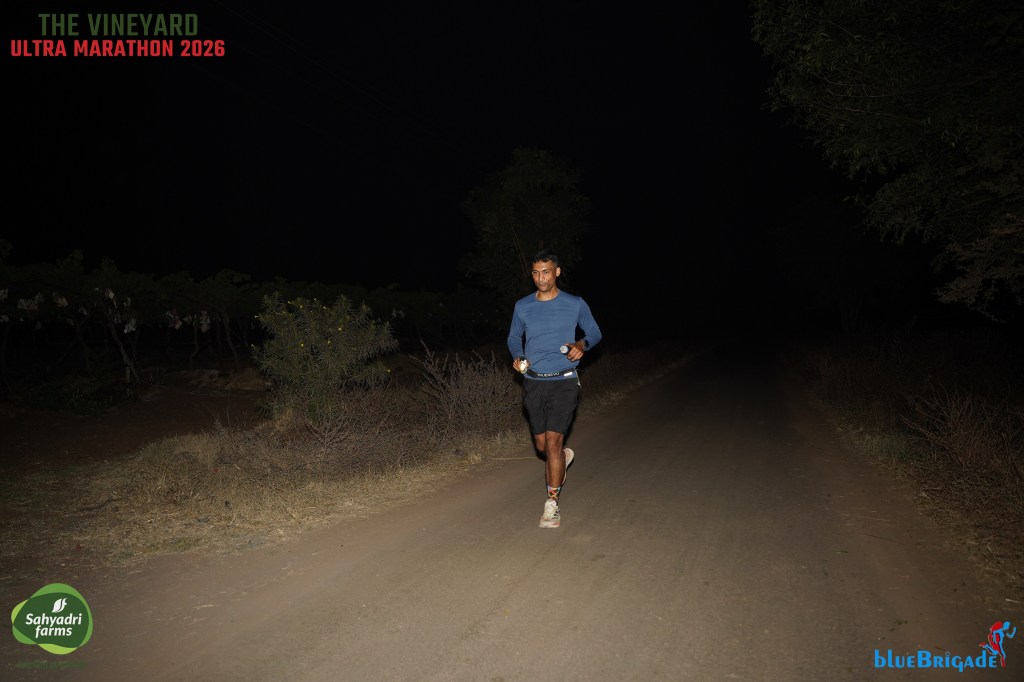
The night loops were solitary affairs in the best possible sense. I greeted runners as I passed them, shared brief conversations that punctuated the silence pleasantly, and marveled more than once at runners who were moving at speeds that seemed almost unreasonable at that stage of the race. By 6:35 AM the following morning, I had 135 km behind me and the first pale light of dawn beginning to filter through.
The early morning sun brought warmth but also, unexpectedly, a kind of heaviness, my pace dropped as the temperature climbed, and the jacket I had kept on through the cold night began working against me. I stripped it off and carried it in my hand as I worked through the final 25 km loop of Day 1, arriving back at the start point at 10:35 AM with 160 km complete in 25 hours 30 minutes. An hour and a half behind my loosely held target, though the number barely registered emotionally because I had genuinely been running my own race rather than a race against a clock.
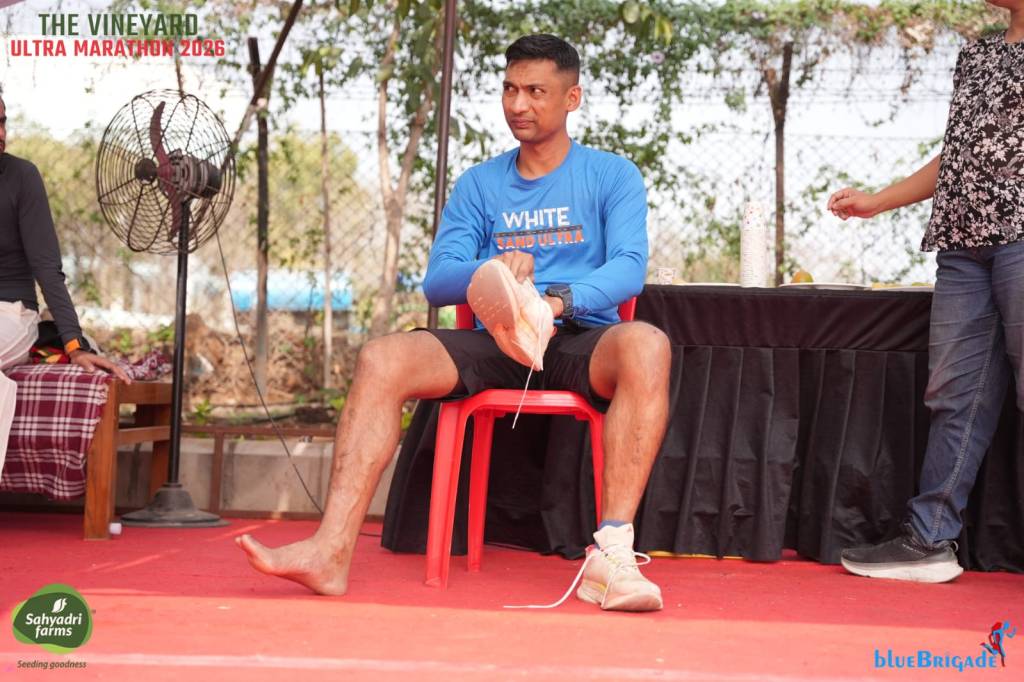
What did register, quite insistently, was the fatigue and the sun, which was now at its most unforgiving. Sleep was pulling at me with the kind of quiet persistence that is hard to argue with after 25 hours on your feet. I took a bath, allowed myself a 30-minute nap, changed clothes again, and stepped back out onto the course. Day 2 had already begun.
Day 2
I started the second day feeling refreshed but only briefly, as the body has a way of remembering everything you asked of it the day before. The morning energy that had accompanied the nap faded faster than I would have liked. The sun bore down harder than it had on Day 1, the route offered almost no shade beyond the brief shelter of the aid stations, and the pace that had felt natural and almost effortless in the opening hours now required genuine, ongoing negotiation with legs that had opinions of their own. I kept moving, run, walk, refuel, repeat holding the rhythm together through sheer stubbornness more than physical ease.
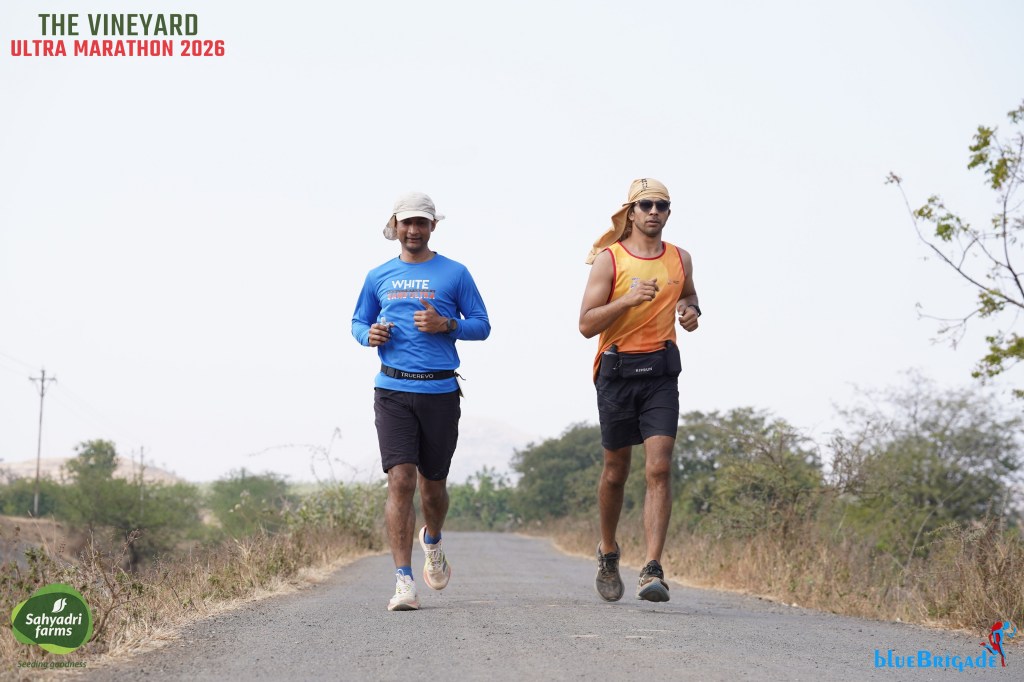
By 3:30 PM, 185 km were behind me and I stopped for lunch, setting my sights firmly on crossing the canal section before nightfall. I pushed for it with everything I had, but the sun went down while I was still mid-loop, and by the time I reached the 5 km aid station on return leg, I was standing in the growing dark, stretching and steadying myself against the sudden, sharp cold that had rolled in with the night. I waited for a few minutes, got some movement back into my legs, and started again but the temperature drop hit me like a wall, and I was very nearly shivering by the time I found my stride.
I completed 210 km at 8:30 PM, 35 hours 30 minutes into the race, arrived at the start point, had dinner, and changed clothes for the third time, reaching automatically for my jacket. It was gone. Somewhere in the chaos of the day it had been misplaced, and in the cold of that second night its absence felt genuinely significant. The Race Director, without missing a beat or making me feel the inconvenience of it, located another jacket from my bag kept in the room and brought it to me. It was a small act, which had an enormous impact.
The night grew colder still, and my pace dropped accordingly. The body was running on increasingly thin reserves, and then, around 1 AM, disaster arrived without warning, I twisted my ankle twice in quick succession on the asphalt, caught out by a large, poorly lit crater in the road while I was mid-conversation with a fellow runner. It was entirely my fault; I had let my attention drift for a moment, and the road had taken its opportunity. Running became walking, and walking became a careful, painful negotiation with an ankle that was now making its displeasure loudly known with every step. At the start point, the doctor treated the inflammation and I rested for 15–20 minutes before continuing, grateful for the pause.
When I headed back out, running was largely off the table and walking was my only realistic option, which was manageable enough until the hallucinations began arriving quietly and without announcement. A tree on the roadside became something else entirely. A dustbin sitting by the path transformed, in my exhausted mind, into a person seated in the dark. I recognized the signs immediately and made the decision to sleep rather than push through something my brain was clearly not equipped to handle safely. Thirty minutes at the start point, then another 30 minutes after completing a further 10 km loop, and the edges of the world sharpened back into their correct shapes.
When 5 AM arrived, I found myself in an unexpected situation: I had completed only three of the five mandatory 10 km loops required before I could return to the longer 25 km circuit, which meant I was locked onto the shorter night loop even as the sky began to lighten. In the moment, it felt like a frustrating constraint. What it turned out to be was a gift, the ankle steadied on familiar, stable ground, the cool morning air lifted both my pace and my spirits, and I covered the next 20 km in 3 hours 30 minutes, arriving at the 48-hour mark with 260 km behind me.
Day 2 was over. It had been, without question, the hardest, slowest, and most dramatically eventful day of the three.
Day 3
Breakfast. Fresh clothes. A strategy that was, finally, blessedly simple: two more 25 km daytime loops would bring me to 310 km, and the remaining 28 km could be handled through the night with the finish line waiting on the other side.
By now, only seven runners remained on the course, and the race had taken on the particular atmosphere of its final chapter, quieter, more inward, the earlier noise and crowds replaced by a vast, unhurried solitude that I had come to appreciate rather than fear. The aid stations were more intimate, the volunteer conversations more personal, the silence between them longer and more complete. I found myself thinking, not for the first time, that the volunteers deserved their own story entirely, three days on their feet, still present, still warm, still extending the same care and attentiveness at hour 50 as they had at hour one, which is a form of endurance that deserves as much recognition as anything the runners were doing.
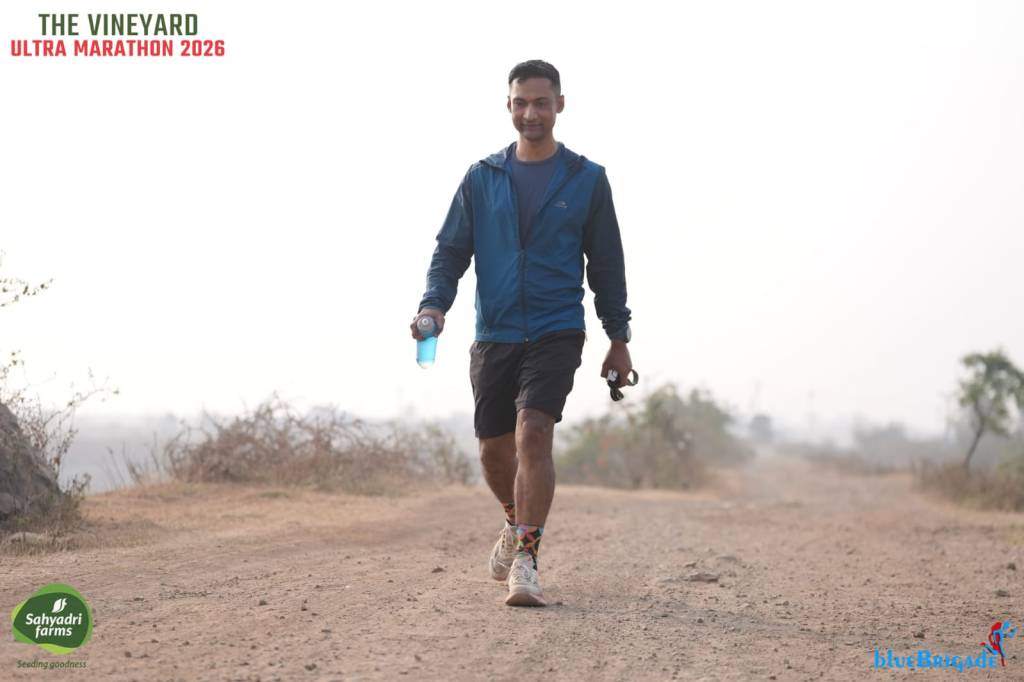
The afternoon heat on Day 3 was the most intense of the entire race, the sun seeming to have saved its worst for the final day as though determined to extract one last test. I finished the first loop at 1 PM, 285 km in 52 hours and made the deliberate, considered decision to sleep before continuing rather than push straight through. The hallucinations of the previous night were still clearly in my memory, and the brutal afternoon heat offered a practical reason to rest that I was happy to honour. A 30-minute nap, a bath, clean clothes, and something else I hadn’t thought to try until now: boroline on the chafing in my groin area that had been quietly but insistently tormenting me for the better part of two days, Vaseline having done nothing meaningful to address it. The relief was immediate and almost comically complete, a problem that had felt significant enough, simply dissolved, and it didn’t trouble me again for the rest of the race.
I started the final 25 km loop with a clarity I hadn’t felt since Day 1, fully and consciously aware that this was the last time I would run this particular stretch of road in this particular race. I crossed the canal section in daylight, a small personal victory that I had set as a daily goal and finally achieved cleanly. At the 12.5 km U-turn, I thanked the volunteer and the aid station (although it being inanimate) with a quiet sincerity that felt different from all the previous thank-yous, because this time we both understood it was the last one. It was at precisely this point, standing at a water table in the middle of villages with aching legs and 300 km behind me, that I allowed myself for the very first time in the entire race to genuinely believe I was going to finish.
When I arrived back at the start point at 6:30 PM, 310 km in 57 hours 30 minutes, the volunteers were cheering differently, with an energy that was more charged and specific than the warm encouragement they had offered every other time I had come through. I asked what had changed. They told me I had moved into the lead position. I hadn’t known, hadn’t been tracking it, hadn’t thought to ask, because I had been so completely absorbed in the simple, consuming project of finishing the race that the question of standings had genuinely never entered my mind. The information landed somewhere between surprise and disbelief, and I let it sit there without quite knowing what to do with it, because there were still 28 km left to run.
The Final 28 Kilometres
I ate two sandwiches at the start point, had a brief and warm exchange with the volunteer who had become something of a quiet companion across the three days, and headed out for the last time with the night settling softly around the farm. The plan was two full 10 km loops followed by a 4 km out-and-back to close out the remaining distance, and I attacked it with an energy I hadn’t expected to find.
Something had shifted in those final kilometres, some internal dial had turned, and I found myself running the trail sections I had carefully avoided for the previous two days, headlight on full beam, feet finding their way across the uneven ground with a confidence that surprised me. The loops went by with a momentum that felt earned rather than forced. At the U-turn of the second loop, I stopped to genuinely thank the aid station volunteers and the aid station itself, not the quick, passing gratitude of someone mid-race, but a real acknowledgment of what they had given us over three days: their time, their patience, their presence in the dark at 2 AM when every other reasonable person was asleep.
Somewhere in those last 8 km, the emotion arrived, quiet and unexpected, the way it tends to in these moments. Not dramatic, not overwhelming, but a private, unguarded recognition that I had done something I had genuinely doubted I was capable of, had pushed through two sleepless nights and a twisted ankle and hallucinations and heat and cold, and was now, improbably, four kilometres from a finish line. At the 4 km mark, the volunteers who had been waiting for me stepped forward and wrapped me in hugs and congratulations, and I started the final stretch with my chest full of something I didn’t have a precise word for.
Eight and a half minutes per kilometre. At that point in the race, in that body, it felt like a sprint.
At the finish line, the cheers were warm and real, and the silence that followed felt complete in the best possible way. 338 km. 61 hours and 37 minutes. First place overall. Course record.
I bowed down at the finish line with gratitude and maybe few teardrops trickled down my eyes (I may not acknowledge that this happened).
After the Race
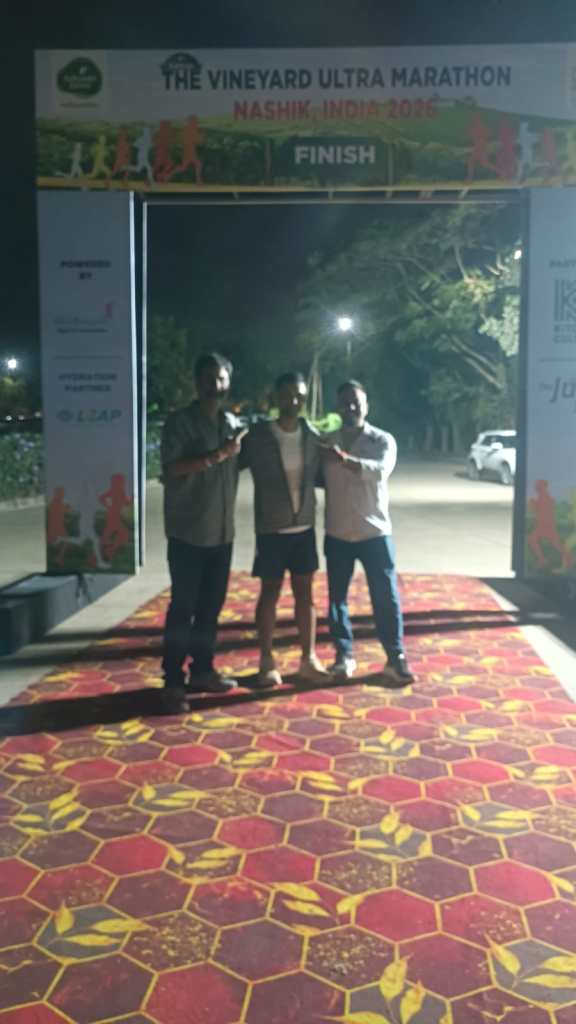
The shivering began almost immediately as the body’s temperature regulation failing after three days of continuous effort, the core temperature dropping rapidly in the cool night air now that the engine had finally stopped. I went to my room, took a bath, changed into warm clothes, and came back down to the finish area to wait for other runners completing their own journeys.
Later, there was maggi, the universal language of post-race recovery and then an attempt at sleep that my body flatly refused, too much persistent pain in too many places for genuine rest to come easily. The night passed slowly but not unpleasantly, the ache in my legs a reminder of what they had just carried me through.
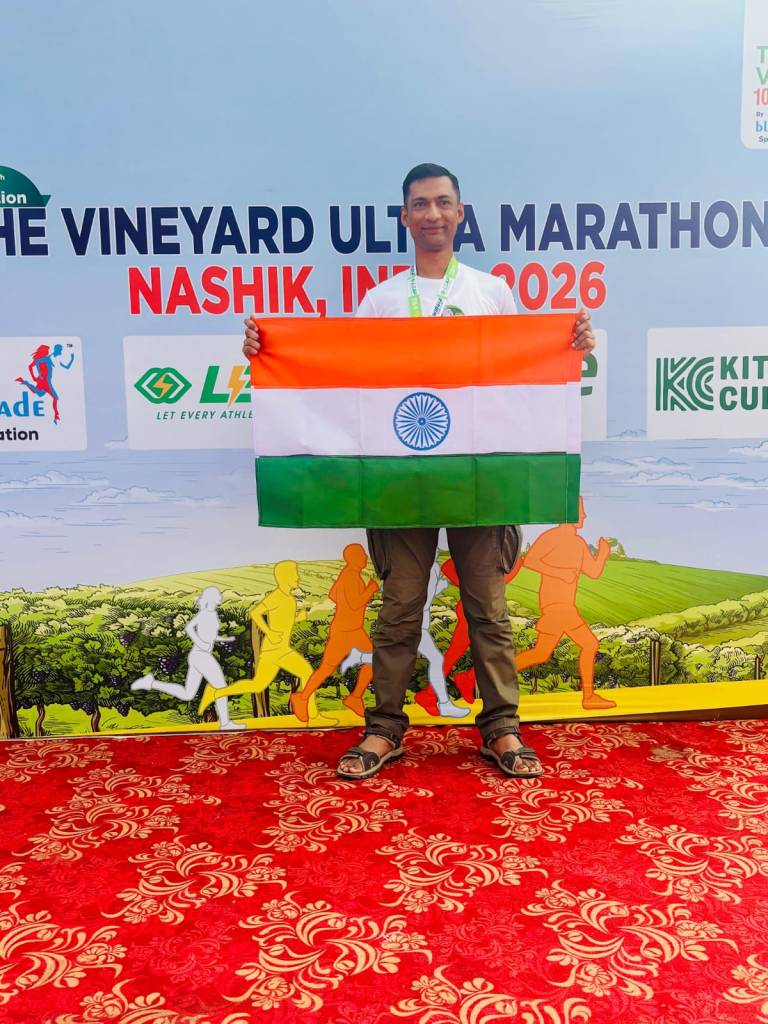
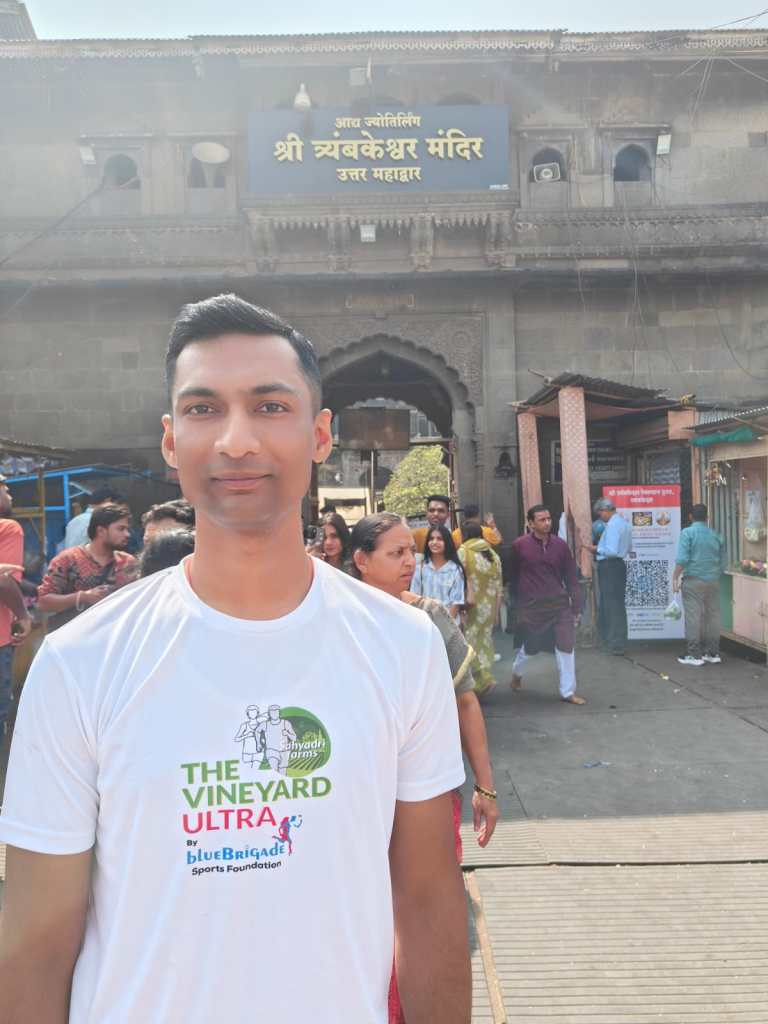
The next morning, I booked a cab and visited Trimbakeshwar temple as I had planned, then made my way back to Bengaluru via Mumbai, feeling the particular contentment that follows races of this length. Somewhere along the journey, I left my finisher’s medal in the cab, a moment of post-race brain fog that could have ended in a permanent loss. The cab driver, without making anything of it, couriered it back to my home address. In a race full of human kindness, it turned out the kindness followed you all the way home.
The Volunteers
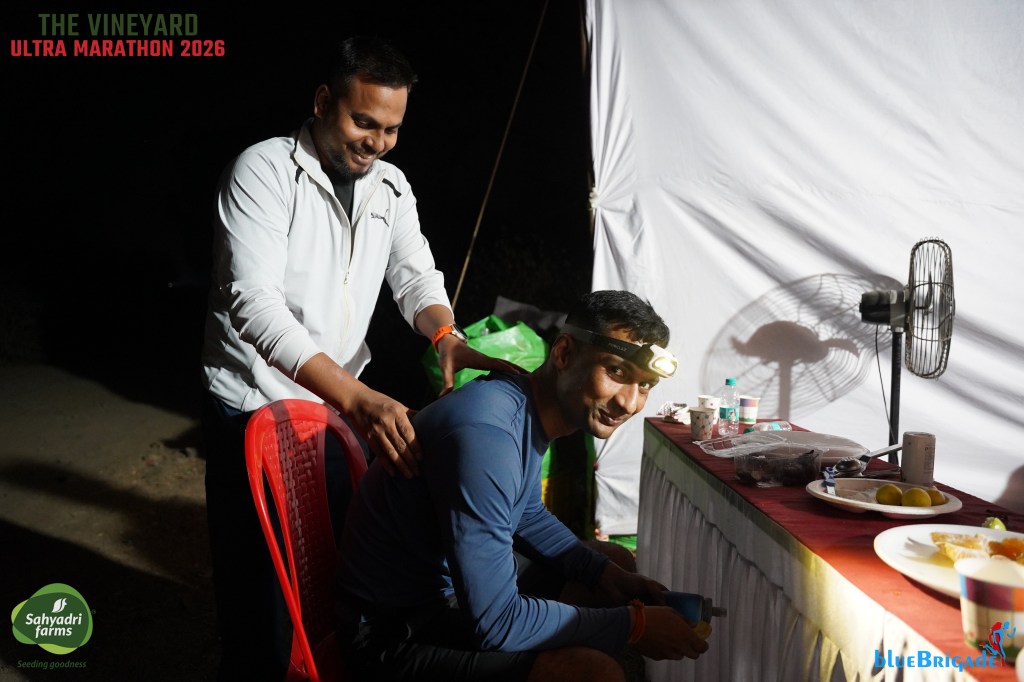
They deserve far more than a section of a blog post, but this will have to do. Over three days, they stretched legs that had long since stopped asking to be stretched, held conversations that gently pulled exhausted minds away from the pain they were sitting inside, offered food alternatives with cheerful persistence when runners refused what was on the table, and somehow showed up with the same warmth and attentiveness at hour 60 as they had at hour one. Runners who had finished their own distances earlier in the weekend returned not to rest but to volunteer, bringing with them a particular understanding of what the remaining runners were experiencing. The whole ecosystem was one of quiet, generous, deeply human care. This race does not happen without them. None of these races ever truly do.
What the Race Taught Me
When I returned home, my feet were swollen beyond recognition, the ankle still protesting every step with a dull, insistent complaint. Recovery was unglamorous and unhurried, office, food, rest, patience, and the discipline of doing nothing more than was necessary. It took nearly ten days for my feet to return to their normal shape, and I held off running for three full weeks after that, walking instead, doing light strength work, and slowly, carefully earning my way back to training. My body had given everything it had over those 61 hours, and for once, I gave it the time it was asking for in return, without guilt and without rushing.
More than anything, Vineyard Ultra reminded me why I run, not for times, not for rankings, not for the validation of outcomes I had spent too much of 2025 chasing. The first place finish and the course record were genuine surprises rather than goals, which made them feel like gifts rather than achievements, and there is a meaningful difference between those two things. What the race gave me that felt most real and most lasting was the experience of being entirely present for three days, stripped of everything except the next kilometre and the people around me making it possible.
The feet have healed. The training has quietly restarted, building back one honest session at a time.
And already, right on schedule, the itch has returned, that familiar, irrational, irresistible stirring that arrives after every race like an old friend who never stays away for long, carrying with it a single, inevitable question:
What’s next?
 Running Tales by Sudipto